Damnoen Saduak
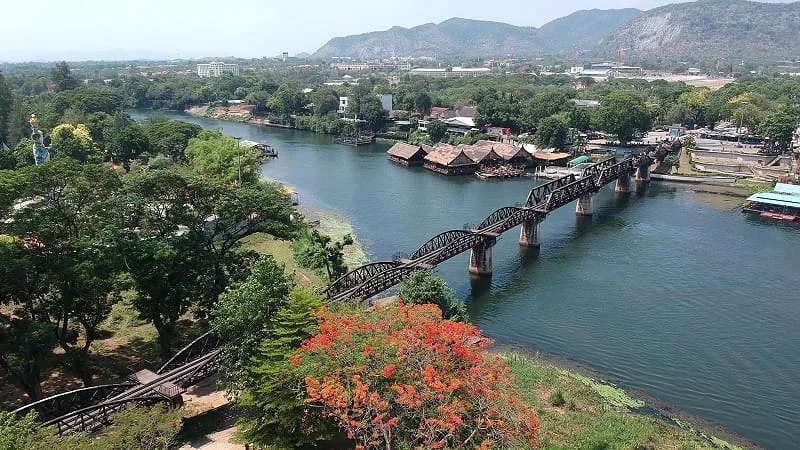
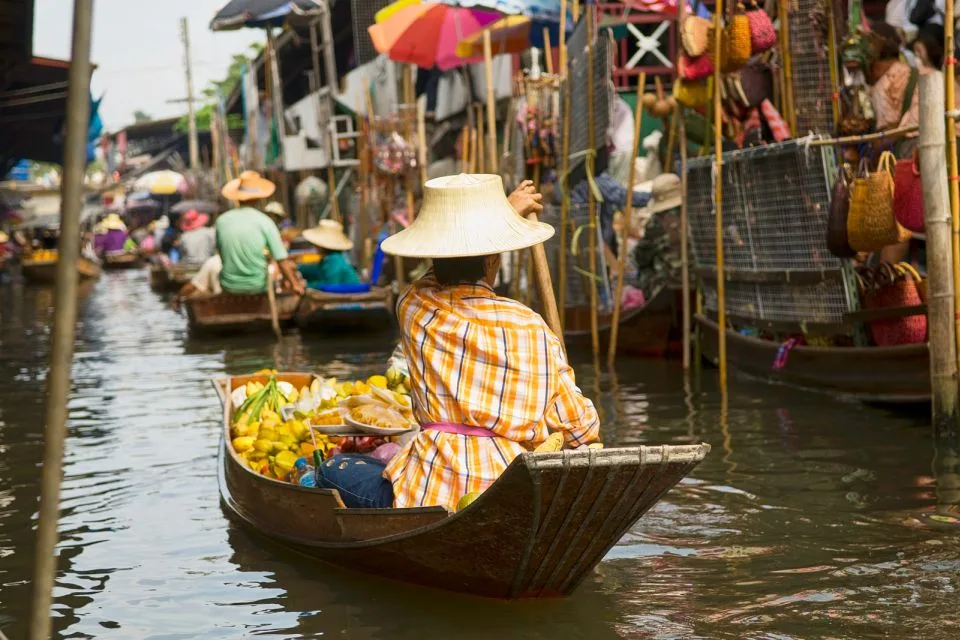
The floating market. Vendors in boats, and sailing among the canals.

Damnoen Saduak and the folding train market of Maeklong, from 835 THB, meeting downtown or with hotel pick-up.
Check availability and priceFrom 835 THB, when booked in advance.
Three questions, and according to them everything falls into place
First question: where are you departing from. This is the biggest difference on the page. A ticket that requires self-arrival at a meeting point, at Lamphu or Asoke, costs a lot less than a ticket with hotel pick-up. The exact same route: 835 meeting at Lamphu versus 1,580 with hotel pick-up.
Second question: how many stops. The two markets are the basis in all tickets. On top of them, you can add the Dragon Temple (in the 835 ticket), elephant camp (1,350 or 1,780) or Ayutthaya (2,800). Every addition extends the day.
Third question: how many of you. the private tickets are priced per vehicle, not per person. For a couple, they're very expensive; from five passengers and up, they become cheaper than the shared ticket, and for nine passengers, that's about 790 THB per person, the cheapest on the page.
and what seems reversed but isn't: the ticket for the floating market Only costs 1,870, more than the two markets together at 1,000. The explanation is the nature of the transport: there it's private and at a time convenient for you, and here it's shared and at a fixed time.
And what doesn't change between the tickets: the markets themselves. Everyone arrives at the same Damnoen Saduak and the same train market in Maeklong. The difference is how you get there, how many stops, and who travels with you, not the quality of the tour.
and why they're almost always on the same day
Damnoen Saduak It's the famous floating market in Thailand, canals where vendors sell fruit, food, and souvenirs from longtail boats, and visitors sail among them.
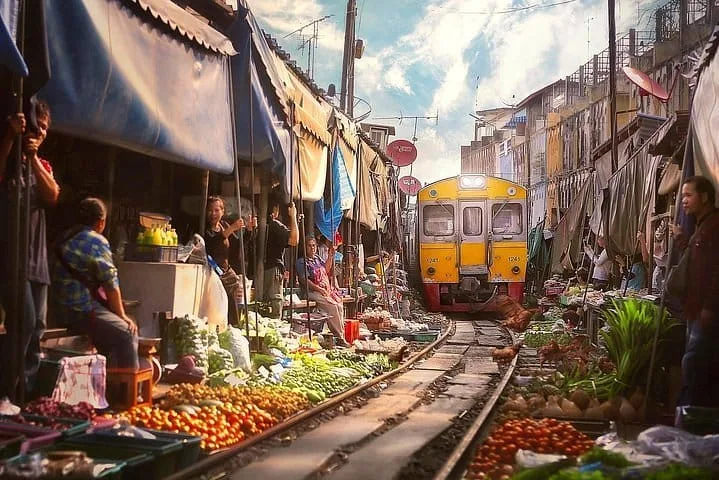
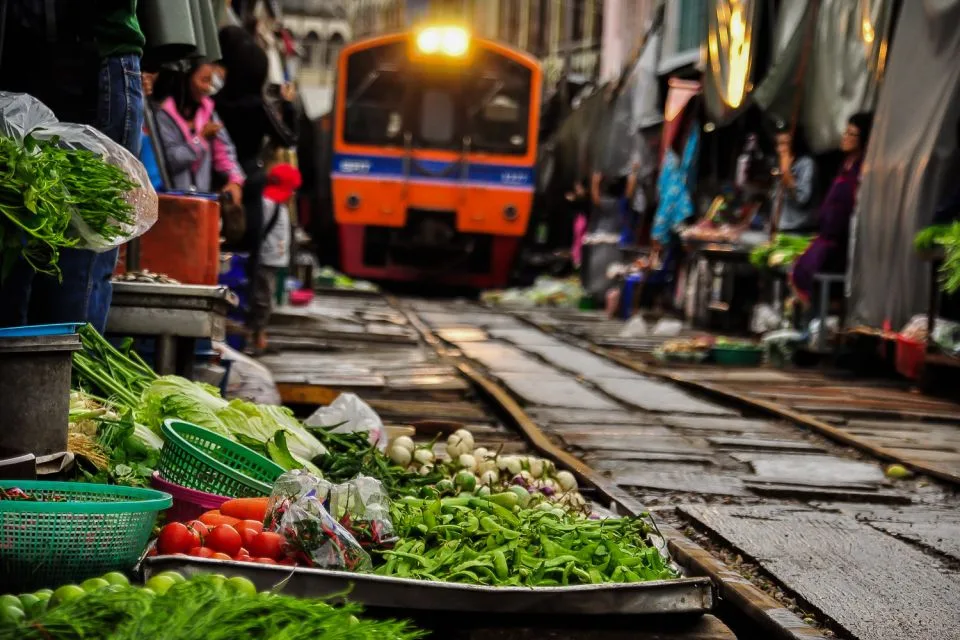
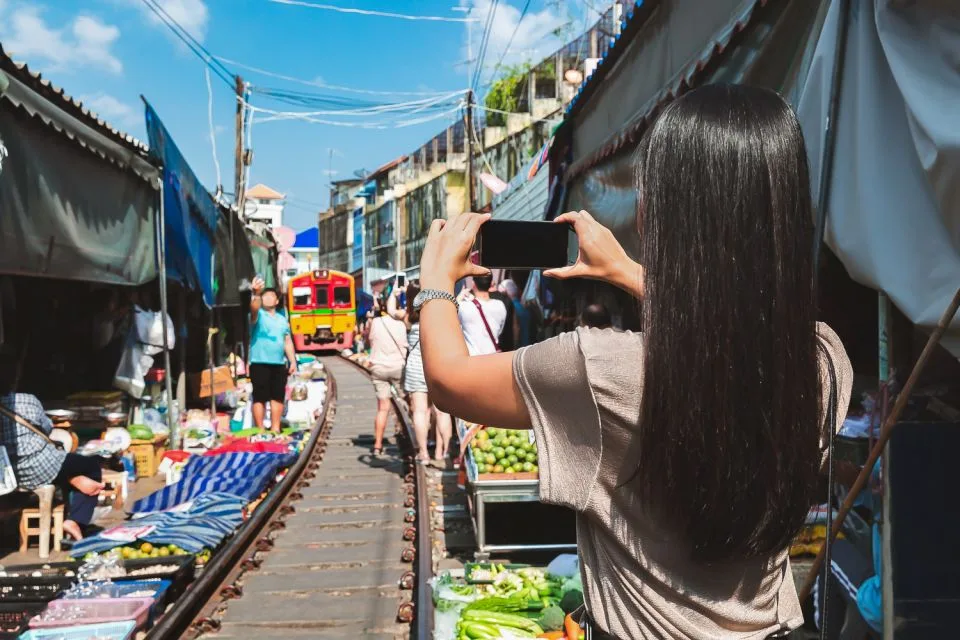
the train market in Maeklong Built on top of an active train track. Several times a day the train passes, and the stalls and canopies fold up within seconds and reopen right after it. This is the sight people come for.
Both are west of Bangkok and close to each other, so almost all versions combine them, and whoever travels to one passes by the other anyway.
The floating market. Vendors in boats, and sailing among the canals.
A market on an active track, that folds up at every train pass.
The markets operate in the morning, and all versions depart early.
The Dragon Temple, elephant camp, or Ayutthaya, depending on the version.
Here the difference between the tickets is the largest
the child's price changes dramatically between the tickets, and therefore a family that chooses based on the adult price alone might pay a lot more.
the cheapest for a child is 625 THB, in the two-stop ticket where the adult price is 1,150. A family of two and two pays 3,550 THB there.
For comparison: the same family with the 835 ticket pays 3,340, but arrives on their own to the meeting point at Lamphu. And with the ticket including hotel pick-up at 1,580, it pays 6,320.
In the ticket with the elephant camp without riding, the child's price is the same as the adult's: 1,350 for each. This is the only ticket here where there's no child discount at all.
and in the private tickets, age doesn't matter: The price is per vehicle. For a group of six or more, this is usually the cheapest.
The stalls sit on the track, and the train passes
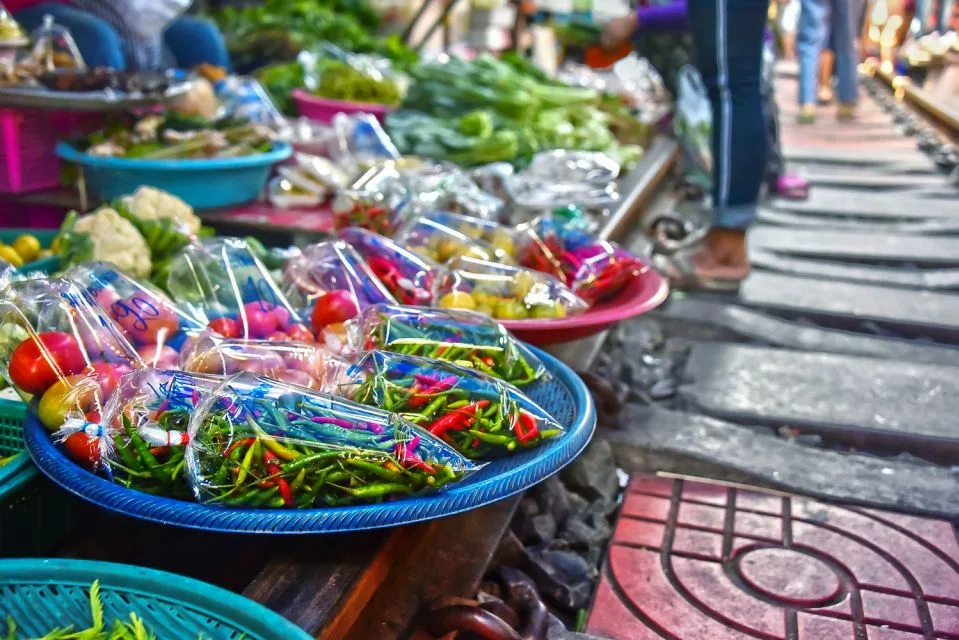
Maeklong market operates on an active train track. The vendors spread out the merchandise on the sides and over the tracks themselves, and stretch canopies above.
How many times a day a whistle is heard. within seconds The vendors fold up the canopies, pull the crates back, and the train passes within centimeters of the merchandise. The moment it passes: everything spreads back out.
the local nickname for the market is "Talat Rom Hup", and its free translation is "the market where the umbrella folds up." It has operated this way for decades already, and this is the vendors' work routine, not a show for tourists.
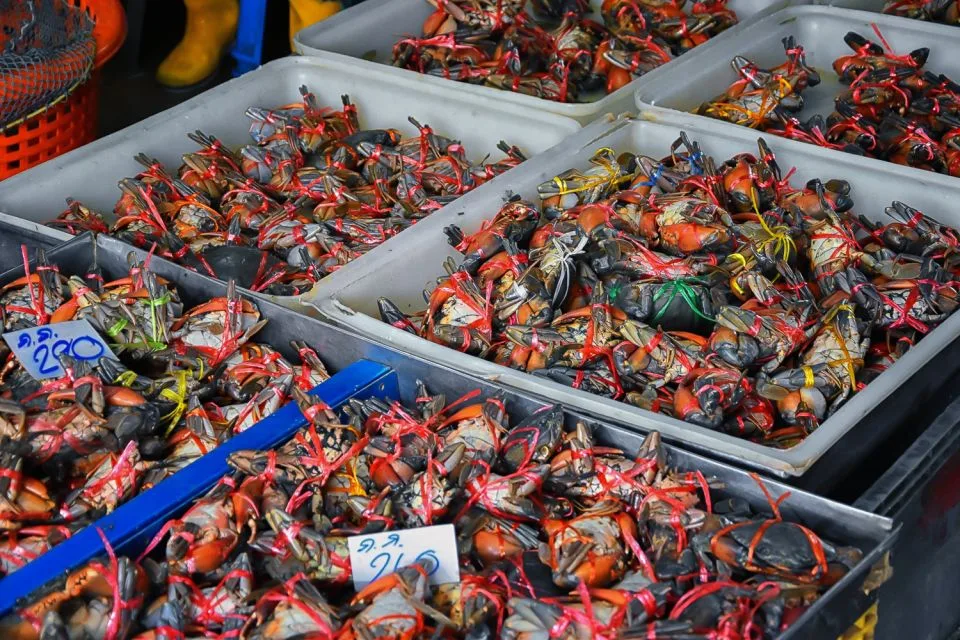
Besides this moment, it's a regular fresh market, vegetables, seafood, meat, and spices, and it's worth a walk even without the train.
and what's the difference between the boat types
Damnoen Saduak is the famous floating market in Thailand, and operates in a network of canals dug in the 19th century. The vendor women paddle wooden boats loaded with fruit, vegetables, and cooked food, and sell directly from the water.
arriving into the market is By boat, and there are two types: a longtail boat motorized, that brings you from the pier through the wide canals, and a paddle boat quiet, that enters the narrow canals where the market itself is.
This difference changes the price. In some tours the paddle boat is included and the longtail boat isn't, and in some it's the opposite. It's worth checking exactly what's included before booking.
the market is active Early in the morning, and fades toward noon. This is the reason the tours depart from Bangkok at a very early hour.
early departure and return at noon
the two markets are located west of Bangkok, in the Samut Songkhram and Ratchaburi area, about an hour to an hour and a half drive. Most of them are combined in one day.
The departure is early, usually between 06:00 and 07:30, because The two markets operate in the morning. Whoever leaves late arrives at a floating market that has already emptied out.
The return to Bangkok is usually in the early afternoon, and this leaves the rest of the day free.
What to bring: Cash, the floating market vendors don't accept cards, a hat, sunglasses, and a small umbrella. There's no shade in the boat.
And entry fees and the train ticket aren't included in some of the tours. This is a detail that changes the final price.


When you send an inquiry, we keep the details you provided (name, phone, email and trip details) to handle your inquiry, get back to you and for the uses you approved in the form, as set out in the Privacy policy. Beyond that, two things need your permission: Analytics of pages viewed, and Embedded content such as videos and maps that come from other services and can see your IP address.
Your choice is saved in your browser, and you can review and change it at any time in the privacy policy.