Full day
Departure is early and the return in the evening. Do not plan another activity for that day.
Ten hours from Bangkok to Kanchanaburi, the River Kwai Bridge, the Death Railway and the historical sites of World War II.
Check availability and priceFrom 1,600 THB, when booked in advance.
Season and time
November to February It's the comfortable season: dry and relatively cool.
In the rainy season, June to October, the scenery is green and the river is full. The rain comes in short bursts and usually doesn't cancel a stop.
Worth it in any season Leave early: The bridge and the platforms are much more pleasant before 11:00, and afterward they're hot and exposed.
The River Kwai Bridge and The Death Railway
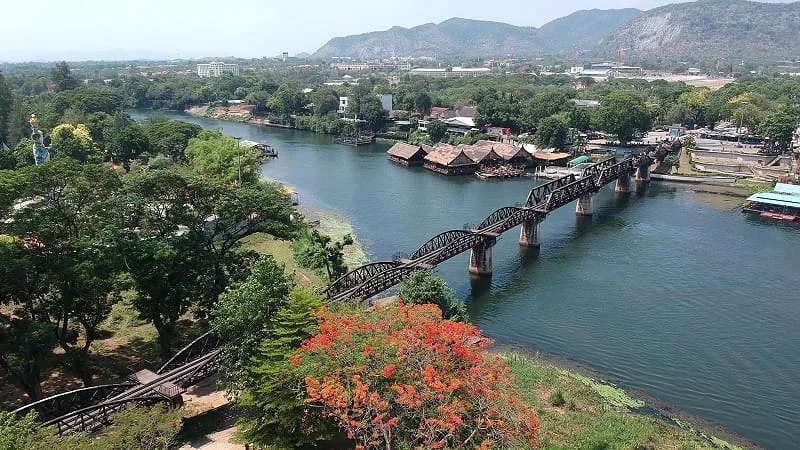
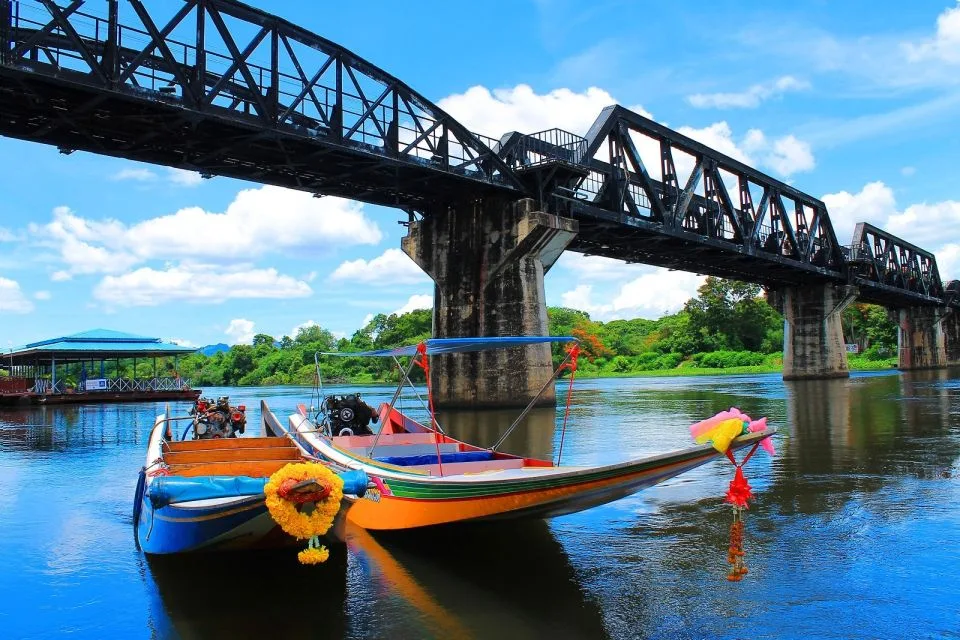
The River Kwai Bridge It's the site most identified with Kanchanaburi, and part of the "Death Railway", the railway line that was forcibly built during World War II between Thailand and Burma.
The railway was built by prisoners of war and Asian forced labourers in deadly conditions, and that is why the site is A memorial site and not just a photo spot. The visit includes the historical sites along it.
and when is the two-day tour preferable
For those who have One free day in Bangkok and wants to see Kanchanaburi without an overnight stay. The tour starts early, ends late, and covers the historical core.
Those who want to add the Erawan Falls, the floating market and the monkey sanctuary, the two-day tour to Kanchanaburi and Amphawa covers all of that at a more comfortable pace. It's a completely different tour, not an extended version.
and why the name stuck to it
In the years 1942–1943 the Japanese forces built a railway to connect Thailand to Burma, to create an overland supply line that would bypass the sea. The work was carried out by Allied prisoners of war and Asian forced labourers.
The railway stretched over about415 kilometres through jungle, rivers and rock passes, and was completed within about a year, a pace bought at a human price that's hard to grasp. That is the reason for the name it acquired.
The bridge over the River Kwai is the most famous part, mainly thanks to the book and film named after it. The bridge standing today was rebuilt after the war, and you can walk across it.
At the war cemetery in Kanchanaburi, the graves are maintained of Thousands of Allied soldiers who died during its construction. It's a maintained memorial site, not an attraction.
The section that runs on wooden trestles above the river
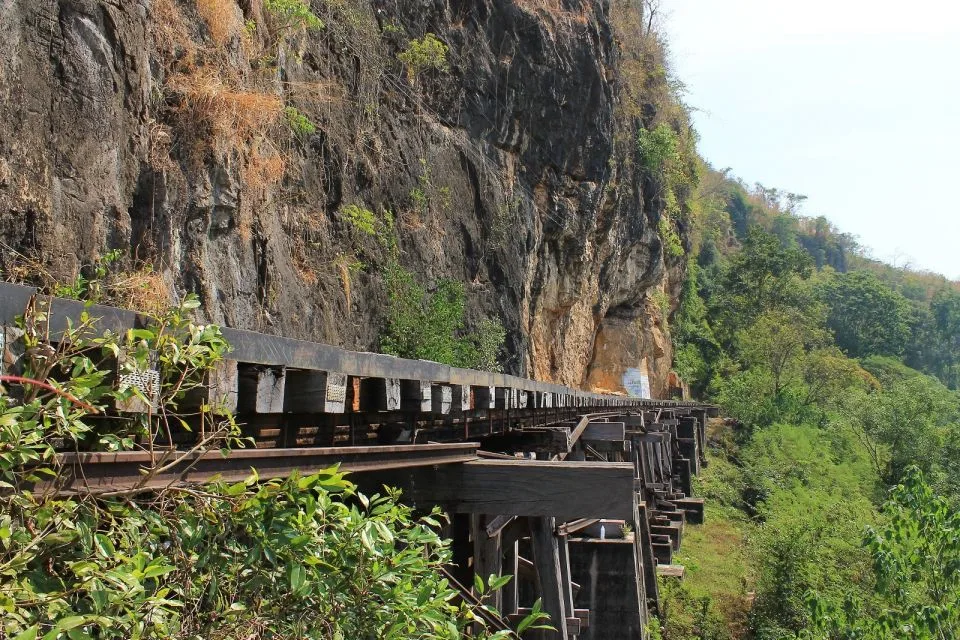
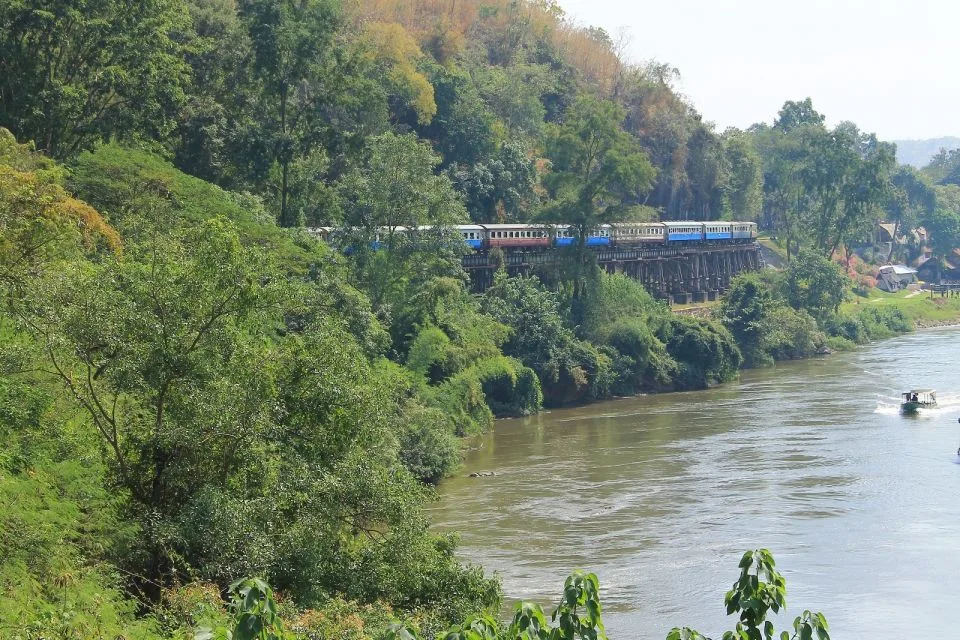
The surviving section still in operation runs along a cliff above the small River Kwai, on Wooden supports that are attached to the mountainside. It's the most photographed section of the railway, and it's the reason most tours include a short train ride.
The ride is by Third-class carriages, wooden benches, open windows, no air conditioning. It's part of the experience, not a flaw.
The stop where most tours get off is Tham Krasae, and from there you continue by vehicle. The ride itself takes between a quarter hour and half an hour.
The basic ride doesn't guarantee a seat. An assigned seat is an extra that isn't included, and on a crowded train you stand.
The information center, the museum and the cemetery
The Thailand–Burma Railway Center It's an interactive museum that tells the story of the railway through photographs, maps and exhibits. It's located across from the war cemetery, and a visit there takes about an hour.
Next to the bridge there's a short commercial street with stalls, cafés and old train carriages placed on display. This is the area where you stop to take photos and rest.
The town of Kanchanaburi itself is small and quiet, and it's the base for most tours in the area, Erawan Falls, Sai Yok Park and the elephant sanctuaries along the river.
This is a memorial site. Photography is accepted, but the cemetery and the information center aren't an attraction, they're a place where people search for names.
A long day, mostly outdoors
Closed shoes with grip. The train platforms, the bridge and the paths around the site aren't smooth, and the bridge itself is sleepers with gaps between them.
Hat, Sunscreen and water. Kanchanaburi is hotter than Bangkok, and a large part of the day is outdoors without shade.
Cash for entry fees and drinks, most sites in the area don't have credit card terminals.
and at the temples on the route: Shoulders and knees covered, for men and women.
What interests them and what less so
The train ride works well with children, open windows, changing scenery, and a ride short enough not to be boring.
The walk On the bridge It's also interesting, but you need to hold hands: there are gaps between the sleepers and narrow crossings.
The cemetery and the information centre suitable for older children who understand the context. For younger ones, it will be waiting time.
The day is long, two and a half hours of driving each way, and it's worth taking that into account with young children.
and how this tour fits in
This tour Focused on history, the bridge, the railway, the cemetery and the information center. Those who also want nature or animals will find them on other routes in the same area.
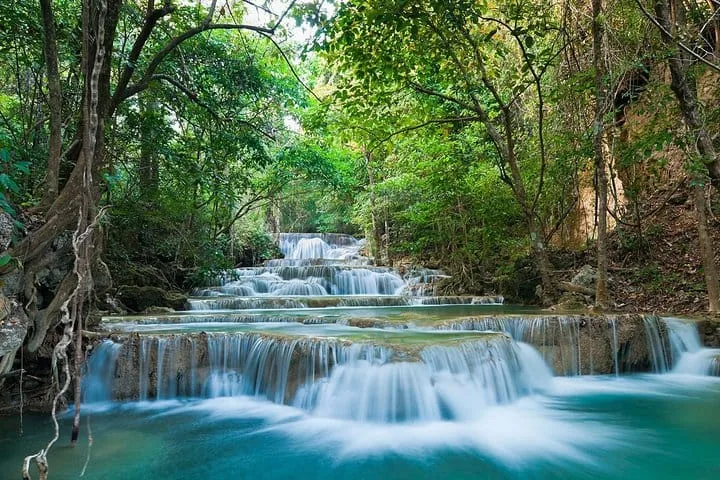
Erawan Falls, seven tiers of waterfalls and turquoise pools, about an hour's drive from the bridge. They're not on this tour.
Elephant sanctuaries along the river, where there's a ground-level encounter without riding. They too are on a separate route.
The Tiger Cave Temple On a limestone hill with a view of the valley, it exists on the combined tour to Kanchanaburi.
Those who want it all at a comfortable pace, the two-day tour covers the area without cramming it in.

Four things that change the day
Departure is early and the return in the evening. Do not plan another activity for that day.
The exact pickup time is set by the hotel location and is given with the booking confirmation.
Shoulders and knees covered: For men too.
Most of the route is outdoors, partly in the heat of the day.

Five-star hotel on the bank of the Chao Phraya River in Bangkok, with an infinity pool, a fitness center…

32-floor five-star hotel in Sukhumvit, Bangkok, connected by a pedestrian bridge to the train…

Five-star hotel in Ladprao, north Bangkok, directly connected to Central Plaza mall…

A modern hotel in a great location, with an impressive rooftop pool, comfortable rooms and tasty breakfasts.

A designed boutique hotel in the Siam area, with a rooftop pool and an Italian restaurant.
When you send an inquiry, we keep the details you provided (name, phone, email and trip details) to handle your inquiry, get back to you and for the uses you approved in the form, as set out in the Privacy policy. Beyond that, two things need your permission: Analytics of pages viewed, and Embedded content such as videos and maps that come from other services and can see your IP address.
Your choice is saved in your browser, and you can review and change it at any time in the privacy policy.